

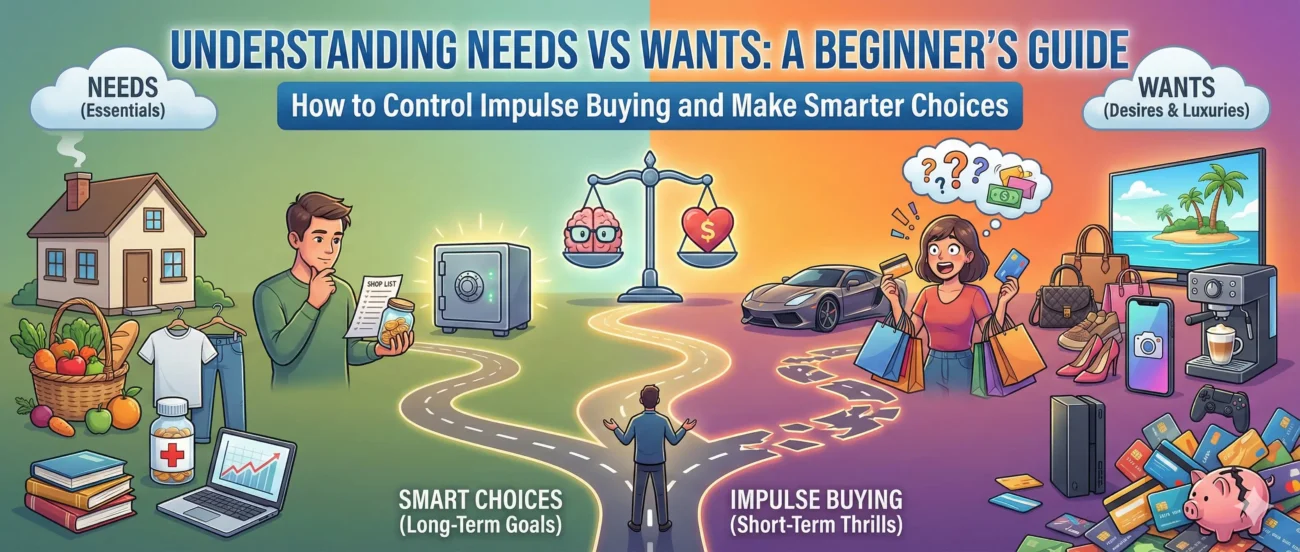
Understanding Needs vs Wants: A Beginner’s Guide
How to Control Impulse Buying and Make Smarter Choices
In today’s world, with ads popping up everywhere and online shopping just a click away, it’s easy to spend money on things we don’t truly need. But have you ever paused to think over the difference between what you need and what you want? Understanding this can change the way you manage your money, reduce stress, and help you build a better future.
What Are Needs and Wants?
Let’s first define these two words.
Needs are essentials you can’t live without, like food, shelter, clothing, and basic health care. These items keep you alive, safe, and able to function. For example, you need nutritious groceries to stay healthy, such as rice, vegetables, and proteins for your weekly meals. However, you don’t need a mansion with a pool—just a safe apartment or house to live in is enough.
Wants are the extras that make life more enjoyable but aren’t necessary for survival. Like the latest smartphone, a fancy coffee maker, or a vacation to a tropical island. For instance, you might want that new iPhone because your current phone works fine but doesn’t have the latest camera features, or you crave a gourmet latte from a café when a simple home-brewed coffee would do.
The key is balance. It’s okay to have wants, but prioritizing needs ensures you’re not sacrificing your basics for short-term thrills. Take Sameer, a university student: he needed textbooks for his classes (a need), but he wanted trendy sneakers. By focusing on the books first, he avoided wasting money.
Why Does This Matter?
Mixing up needs and wants often leads to financial trouble. Imagine buying a new pair of shoes on sale (a want) when your rent (a need) is due. It feels good in the moment, but later you might regret it. Studies show that people who can distinguish between the two increase their savings, feel less anxious about their finances, and even enjoy their purchases more because they make intentional choices.
The Trap of Impulse Buying
Impulse buying occurs when you purchase without planning, often driven by excitement, boredom, or stress. It can happen in stores, online, or even at the grocery checkout when you glance at the tempting candies.
Our brains crave instant rewards. Seeing a shiny new gadget draws us into a store, and we overlook the consequences. However, these purchases rarely provide lasting happiness—they often lead to buyer’s remorse and homes filled with an untidy collection of things.
A typical real-world example is holiday shopping. Elsa went to the mall for gifts and ended up buying three outfits for herself because they were “on sale.” By the time she got home, she realized she didn’t need them and had overspent her budget, leaving less for actual presents.
Tips to Control Impulse Buying
Here are some simple, everyday strategies to control those sudden urges:
- Make a shopping list and stick to it: Before heading out or browsing online, write down exactly what you need. If it’s not on the list, don’t buy it. This simple habit helps you cut down on extras. For example, Majid always creates a grocery list that focuses on meals for the week.
- Follow the 24-Hour Rule: Want something? Wait 24 hours before buying. Usually, the excitement wears off, and you see that you don’t really need it. For bigger purchases, consider waiting a week.
- Track Your Spending: Keep a journal or use a free app to log every purchase. Seeing where your money goes can be eye-opening. Ask yourself: “Was this a need or a want?” Over time, patterns develop, helping you identify impulsive triggers.
- Set a Budget for Fun: Allocate a small “fun money’ allowance each month for your wants. This way, you can indulge without guilt, knowing it won’t ruin your finances.
- Question Your Motives: Before buying, ask yourself: “Do I need this? Will it improve my life? Can I afford it without borrowing?” Honest answers often stop impulses in their tracks.
Making Smarter Choices
Once you’ve got impulse buying under control, focus on smarter decisions:
- Prioritize Long-Term Goals: Think about what you truly want in life—a house, travel, or retirement. Align your spending with these priorities. For every desire, ask if it moves you closer to your goals.
- Compare and research: Avoid buying on the spot. Shop around for better deals, read reviews, and see if there’s a cheaper option. Tools like price comparison websites can assist. When Sahil (my son) needed a laptop, he researched models and found a refurbished one that saved him Rs. 50000/ compared to buying impulsively.
- Practice Gratitude: Focus on what you already have. A quick daily list of things you’re thankful for helps cut down the urge to buy more.
- Build Good Habits: Surround yourself with supportive people who value smart spending. Read books or watch videos on personal finance for motivation. Joining a budgeting group helped Adil stay accountable; his friends shared tips that prevented him from impulsively buying a motorcar he couldn’t afford.
Remember, making mistakes is normal. The aim is progress, not perfection. Start small, such as using one tip this week, and gradually improve.
Wrapping It Up
Understanding the difference between needs and wants is like having a great power for your wallet. It helps you avoid impulse purchases, make choices that match your values, and enjoy life without financial stress. By following these steps and learning from real-life stories, you’ll not only save money but also find peace of mind.
What’s one change you’ll make today? Share in the comments if this resonates—let’s support each other on this journey to smarter spending. If you’re new to this, keep it simple and consistent. You’ve got this.







JDextremecasino looks like it’s got some serious action going on! I’m ready for the extreme! Who’s with me? Check it out y’all: jdextremecasino
Superaceph is where the real fun starts! Great selection of games and the payouts have been good!. You gotta try it: superaceph
Logging into phl777login was surprisingly smooth. I’ve seen way worse sign-up processes. Games are alright, nothing groundbreaking but reliable. Give it a go: phl777login