

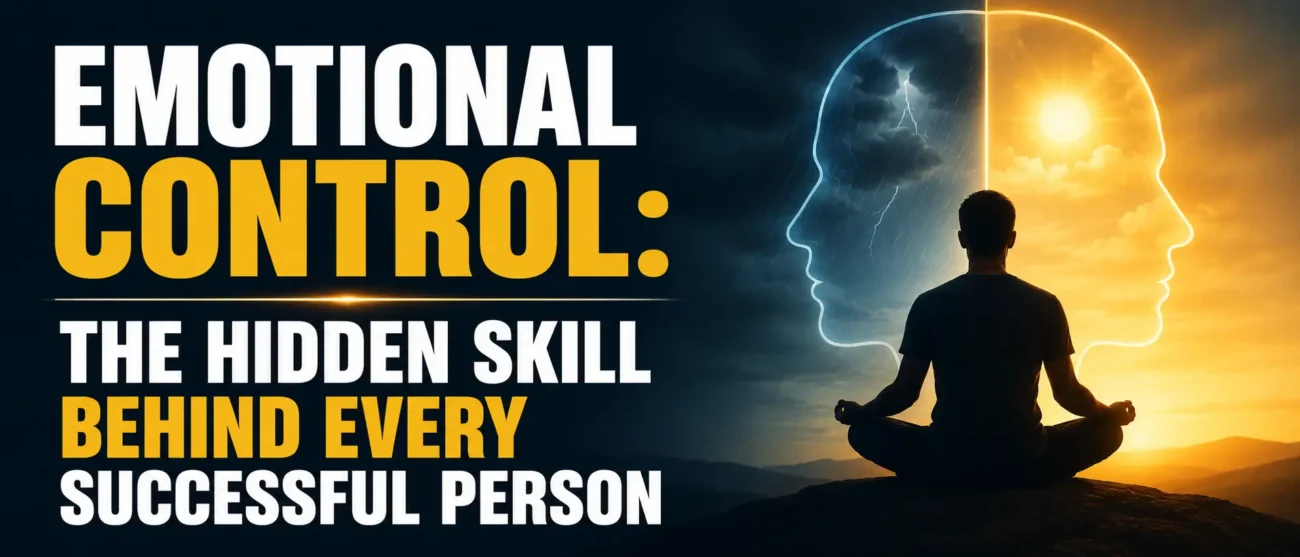
Emotional Control: The Hidden Skill Behind Every Successful Person
Hey friend, have you ever watched someone stay cool during a total crisis while everyone else is losing their minds? Maybe it’s the athlete who nails the game-winning shot with thousands screaming, or the boss who handles a huge mistake without exploding. What’s their secret?
It’s not superhuman intelligence or endless luck. It’s something quieter and more powerful: emotional control.
Think of emotional control as your personal remote control for feelings. It doesn’t mean you stop feeling things. You still get angry, scared, excited, or disappointed. But you don’t let those emotions drive the car. You stay in the driver’s seat.
Why This Skill Changes Everything?
Life throws curveballs every single day. Traffic jams, tough conversations, failed projects, bad news on your phone. Without emotional control, these moments can hijack your focus, ruin your relationships, and push you into bad decisions.
Successful people aren’t immune to stress. They handle it better. They feel the heat but don’t melt down. This one skill helps them:
- Make clearer decisions
- Build stronger relationships
- Bounce back faster from failures
- Keep going when motivation disappears
Imagine two people getting rejected for a big opportunity. Person A spirals: “I’m worthless. Nothing ever works out.” Person B feels the sting but tells themselves, “Okay, this hurts. What can I learn? What’s my next step?” Who do you think is more likely to succeed long-term?
Consider someone like Benazir Bhutto on the political front. She was famously competitive and emotional, but she learned to channel that fire rather than let it destroy the system. Or think about Nelson Mandela. After years in prison, he could have emerged full of rage and a desire for revenge. Instead, he chose calm leadership that changed a country.
Even in everyday life, you see it. The parent who stays patient during a toddler meltdown. The student who keeps studying after failing a test. These small moments of control add up to big success.
How to Build Emotional Control?
The good news? You don’t need to be a monk on a mountain. Anyone can improve this skill with practice. Here are some simple ways to start:
- Pause and Breathe Deep. When you feel yourself heating up, stop. Take three slow, deep breaths. It sounds basic, but it gives your brain a few seconds to catch up before emotions take over. Try it next time someone cuts you off in traffic.
- Name What You’re Feeling. Say it out loud or in your head: “I’m really angry right now” or “I’m scared of failing.” Naming emotions takes away some of their power. It’s like shining a light on a shadow in the dark.
- Avoid Complaining: Instead of “Why does this always happen to me?” try “What can I control here?” Small shifts in thinking create huge changes in behavior.
- Start Small. Don’t wait for a big crisis. Start with annoying daily stuff—like a slow internet connection or a rude comment. Build the muscle now so it’s strong when you really need it.
- Get Enough Sleep and Move Your Body. Tired, hungry, or sedentary people have weaker emotional control. Taking care of your body is emotional control training.
- Write about your Daily Routine. At the end of the day, write down one moment where your emotions got the best of you and what you’ll do differently next time. This tiny habit creates massive growth.
Important point: Emotional control isn’t about suppressing feelings or pretending you’re fine when you’re not. That actually backfires. Real control means feeling fully, then choosing your response wisely.
Some days you’ll slip up. You’ll yell, cry, or make a dumb choice because emotions have won. That’s normal. The key is to be on track quickly and be kind to yourself in the process.
Start Today
You don’t need to transform overnight. Pick just one situation this week where you usually lose control—maybe arguments with your partner, stressful work emails, or negative self-talk—and practice staying steady.
Over time, you’ll notice something amazing. Opportunities open up when you’re the calm one in the room. People respect you more. And most importantly, you start trusting yourself more.
Emotional control might be hidden, but once you develop it, it becomes one of the loudest reasons for your success.
What’s one situation where you want better emotional control? Drop it in the comments—I’d love to hear, and maybe we can brainstorm some tips together.






Yo pak77gamedownload seems legit. Found some cool game downloads there that I couldn’t find anywhere else. Just make sure your antivirus is running, ya know? Here’s the link: pak77gamedownload
Winnerspincasino might just be my new lucky spot. Great selection of games, and the bonuses are pretty sweet. Time to spin and win! Try your luck winnerspincasino.
Jollbee777’s worth a look, especially if you’re on the hunt for something new and maybe a bit different. Give Jollbee777 a try: jollbee777
Great bonuses for new members and the app is very stable. I really enjoy the variety of games on 500jiliapp.
The game variety here is amazing. I love how easy it is to navigate the site. Definitely give phjili333com a go.
The bonus offers are actually worth it compared to other sites I have used. The slots are fair and the excitement is real. Give cwdbetslot a go if you love slots.