

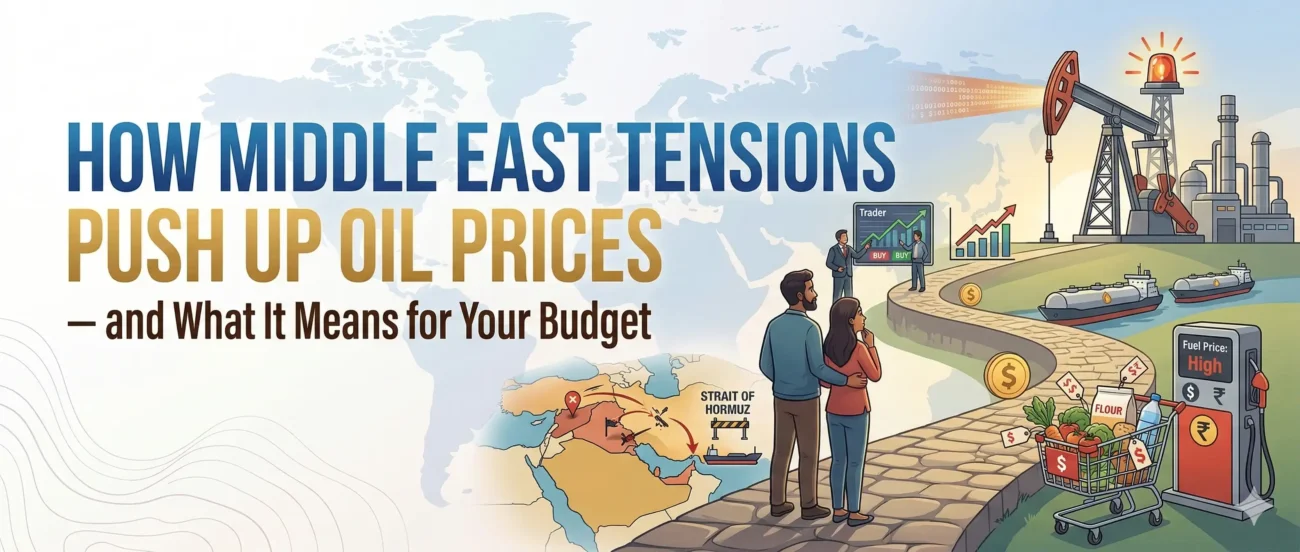
How Middle East Tensions Push Up Oil Prices — and What It Means for Your Budget
If you’ve been filling up your gas tank or checking grocery prices, you might have noticed things getting a bit more expensive. As of early March 2026, the world is watching tensions in the Middle East escalate, with U.S. and Israeli strikes on Iran leading to retaliatory attacks that have disrupted key oil routes and facilities. This news isn’t just a headline — it’s impacting wallets everywhere.
When news breaks about tensions in the Middle East (especially involving countries like Iran, Israel, Saudi Arabia, or the United Arab Emirates), many people wonder, “Why does this affect petrol prices in their city?” The answer lies in how global oil markets work.
In this blog, we’ll break down how crude oil prices work, why these conflicts are driving them up, and what that means for everyday costs like fuel and food.
Why the Middle East Matters So Much
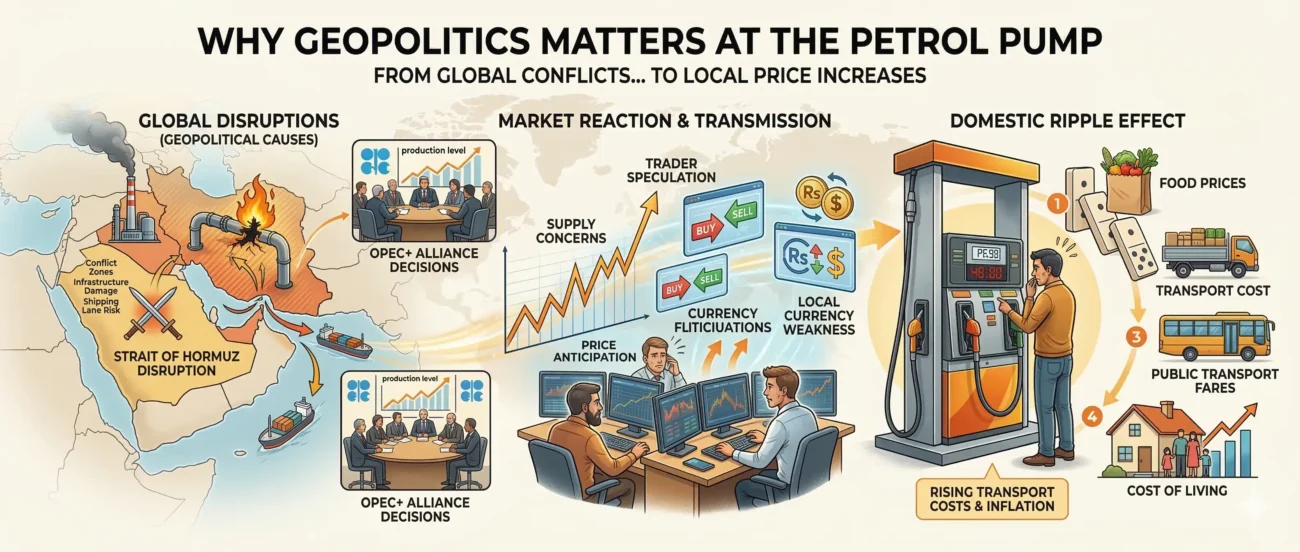
The Middle East produces a large share of the world’s oil. A major portion of this oil passes through a narrow sea route called the Strait of Hormuz. Think of it as if it’s a narrow bridge on a busy highway. If that bridge is blocked or threatened, traffic slows — and prices go up.
When there is conflict, oil fields may be damaged, shipping routes may be attacked, tankers may avoid risky areas, and insurance costs for ships increase. Even the fear of disruption can push prices up.
How Oil Prices Are Actually Set
Oil prices are decided in global markets based on supply and demand. Supply tells us how much oil is being produced and delivered, whereas Demand clarifies how much oil the world needs (for cars, factories, airplanes, electricity, etc.).
When tensions rise, markets worry that supply might drop, so traders start buying extra oil in anticipation of a shortage. This increases demand temporarily, causing prices to rise immediately. Therefore, even before a real shortage occurs, prices can jump.
Why Petrol Prices Rise Quickly
Crude oil is the raw material. It is refined into petrol, diesel, jet fuel, cooking gas, and plastic products. When crude oil becomes expensive, refineries pay more, petrol stations pay more, and consumers pay more.
In oil-importing countries like Pakistan, the impact can be stronger because oil is purchased in US dollars, and if the dollar strengthens, the cost becomes even higher.
Why Food Prices Also Increase
You may ask, “What does oil have to do with food?” A lot. Here’s how. We use fuel for farming. Tractors, tube wells, harvesters — all run on diesel. It increases transportation Costs. Food travels from farms to cities by trucks. Fertilizer Production also slows down. Fertilizers are made using natural gas and petroleum products.
When fuel costs rise, transportation becomes more expensive, farming becomes costly, fertilizers become more expensive, and final food prices increase. This is why conflicts far away can raise the prices of vegetables and flour in your local market.
Other Effects on Your Personal Finances
When fuel and food become expensive, overall prices rise, which causes inflation. Central banks may increase interest rates to control inflation. This can make loans more expensive, mortgages costly, and business financing harder.
The stock market becomes Volatile. Investors become nervous during wars. Markets may fall or fluctuate sharply. Gold prices rise. People tend to buy gold during times of uncertainty. Gold prices generally go up during war.
How Should an Ordinary Person Respond?
Here are simple, practical steps:
- Review your monthly budget
- Reduce unnecessary expenses
- Build an emergency fund (3–6 months of expenses)
- Avoid unnecessary new loans
- Diversify savings if possible
- Stay calm — do not buy in panic
Economic shocks often feel sudden, but good planning reduces stress.
The Bigger Lesson
Global conflicts show us something important. The world economy is deeply connected. A missile fired thousands of miles away can affect:
- The petrol pump near your house
- The price of vegetables
- Your electricity bill
- Your savings and investments
Understanding this connection helps you make smarter financial decisions.
Final Thoughts
Middle East tensions push oil prices higher, mainly due to the fear of supply disruption. Higher oil prices increase fuel costs, which raise transportation and food prices. This eventually affects household budgets through inflation.
While individuals cannot control global politics, they can control spending habits, savings discipline, and financial preparedness. What do you think? Drop a comment below.





Leave a comment