

-
×
Pakistan
₨950.00
Ideology & Constitution
Raising Calm Children in a World on Fire
Raising Calm Children in a World on Fire
_By Adil Seemab_
The news does not knock.
It enters.
War footage flashes across screens.
Explosions.
Crying children.
Burning homes.
Our children see it.
Even when we think they don’t.
One evening, Mansoor sat quietly after watching the headlines.
Bazaid asked, “Why do humans never learn?”
There was anger in the question.
And fear beneath it.
Crises shake children in ways we cannot always see.
Sleep becomes restless.
Questions grow heavy.
The future feels smaller.
War news does not stay on the screen.
It enters imagination.
Children begin to wonder:
Is this coming here?
Are we safe?
Do adults even know what they are doing?
In such moments, parenting becomes steadiness.
First, we must manage ourselves.
If we react with panic, they absorb panic.
If we react with rage, they absorb rage.
Calm is contagious.
So is fear.
Turn off the constant stream.
Limit exposure.
Information is necessary.
Repetition is harmful.
Then talk.
Not with speeches.
With space.
Ask them what they think.
What they feel.
What worries them most.
Listen without correcting their emotion.
Do not say, “Don’t think like that.”
Say, “I understand why that feels scary.”
Children do not need political analysis.
They need emotional reassurance.
Tell them what is true.
Yes, the world has conflict.
Yes, people suffer.
But also tell them what is equally true.
There are helpers.
There are peacemakers.
There are doctors, volunteers, neighbors who protect each other.
Hope must be shown, not forced.
When pessimism appears, do not crush it.
Explore it.
Bazaid once said, “Maybe the world will only get worse.”
I did not argue.
I said, “History has seen dark times before. And yet, people rebuilt. Every generation thinks it stands at the end. But humanity has a stubborn habit of surviving.”
He thought about that.
Children need perspective.
Not denial.
Not false comfort.
Perspective.
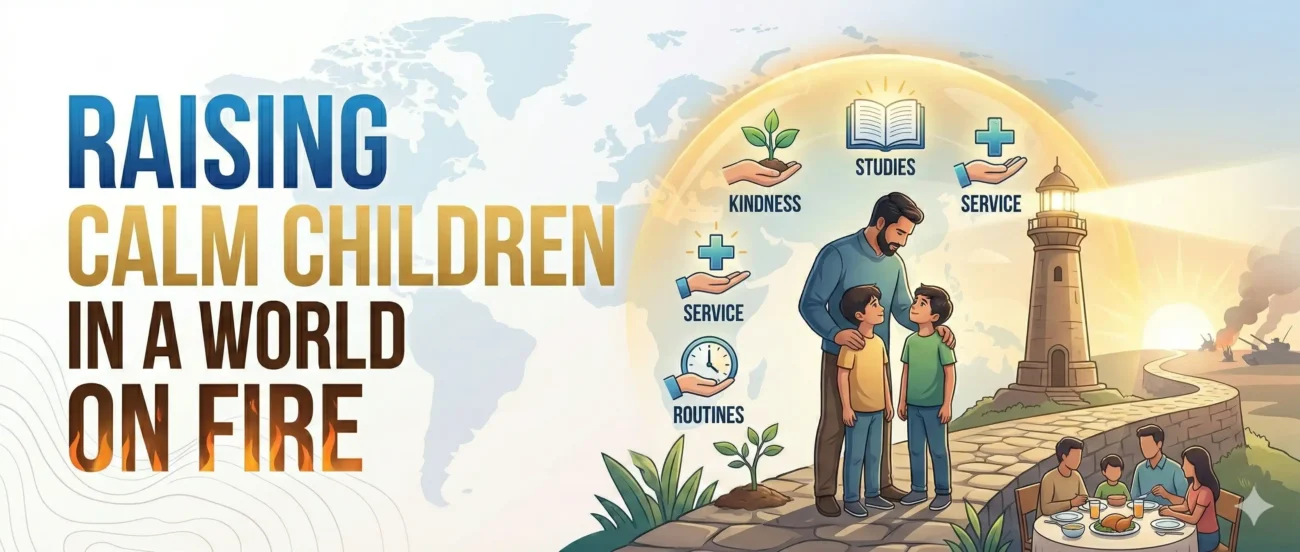
Anchor them in what they can control.
Their kindness.
Their studies.
Their service.
Their circle.
The world may burn in places.
But their character can still grow.
During crises, routines matter more.
Dinner together.
Shared prayer or reflection.
Simple walks.
Normalcy is medicine.
We cannot shield our children from the world.
But we can teach them how to stand in it without collapsing.
War may teach them about destruction.
Our response must teach them about humanity.
In times of global noise, be the quiet voice.
In times of fear, be the steady hand.
Children borrow their courage from us.
Let us make sure we have some to lend.


I’ve tried a few sites lately but this one really stands out for its speed. The interface is super smooth and the rewards are legit. Definitely checking out phjl16com more often!