

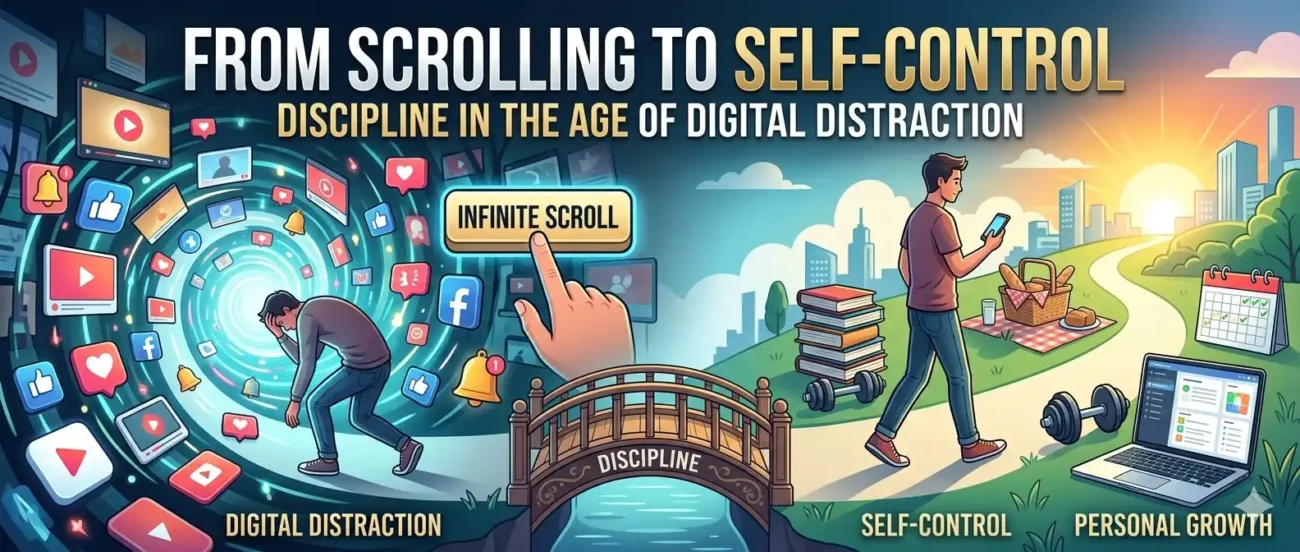
From Scrolling to Self-Control: Discipline in the Age of Digital Distraction
A person wakes up in the morning and picks up the phone. A few notifications appear. Then one video leads to another. Before realizing it, half an hour has gone by. Sound familiar?
Phones are one of the greatest inventions of modern life. They help people learn, communicate, work, shop, and stay connected with the world. But at the same time, they have quietly become one of the biggest sources of distraction. Many people today are not losing their time because they are lazy; they are losing it because their attention is constantly being stolen.
In the age of distraction, discipline has become a big power.
Why People Keep on Scrolling?
Social media apps, short videos, games, and endless notifications are carefully designed to keep people scrolling. Every “like,” message, or new video gives the brain a small feeling of pleasure. Over time, this creates a habit of checking the phone repeatedly.
As a result, many people have difficulty focusing on work or study, reading books for long periods, spending quality time with family, sleeping properly, and thinking deeply or creatively.
The problem is not the phone itself. The real issue is losing control over how it is used.
What Does Discipline Mean?
Discipline does not mean throwing the phone away or living without technology. It simply means using technology wisely instead of being controlled by it.
A disciplined person decides when to use the phone, why to use it, and how long to use it. An undisciplined person opens the phone without purpose and loses hours without realizing it.
Small daily habits decide which category a person falls into.
Why Distraction Is Dangerous?
Distraction may look harmless, but over time, it destroys productivity, relationships, and mental peace.A distracted student cannot perform at full potential. A distracted employee struggles to produce quality work.A distracted parent may physically sit with family while mentally remaining inside the phone.
Constant distractions also weaken patience. People become used to quick entertainment and find it difficult to stay focused on long-term goals. Great achievements require concentration, consistency, and patience — qualities that endless scrolling slowly destroys.
Signs of Distraction
Some common warning signs include:
- Checking your phone immediately after waking up
- Feeling anxious when the phone is not nearby
- Scrolling without any purpose
- Using the phone while eating or talking to others
- Sleeping late because of social media or videos
- Finding it difficult to stay away from the screen for even a short time
Recognizing the problem is the first step toward solving it.
How to Build Digital Discipline?
If you have decided to regain self-control, follow these steps:
1.Turn Off Unnecessary Notifications: Every app doesn’t deserve attention. Constant notifications interrupt focus and train the mind to seek distraction. Turning off unnecessary alerts creates mental peace.
- Create Phone-Free Hours: Set specific times during the day when the phone stays away from you. For example, during meals, before sleeping, during study or work sessions, while spending time with family. Even one or two phone-free hours daily can make a big difference in your life.
- Do Not Start the Day with the Phone: The first few minutes after waking up shape the mood of the entire day. Instead of scrolling, begin the morning with your prayer, exercise, reading, planning, or quiet reflection.
- Use the Phone with Purpose: Before opening the phone, ask: “Why am I using it right now?” If there is no clear reason, it is probably just a habit that needs to be changed. Your sincere focus will help you address this issue soon.
- Replace Screen Time with Real Activities: You cannot remove a bad habit unless you replace it with something better. Reading, walking, exercise, hobbies, conversation, or learning new skills can reduce your dependence on the phone.
- Keep the Phone Away During Work Hours: Your focus improves when you place the phone out of reach. Even a silent phone will distract your mind because the brain keeps expecting notifications.
Many people think discipline limits freedom. In reality, discipline creates freedom. Sameer, a BS Computer Science student, is enjoying freedom from poor results since he regained self-control. A disciplined entrepreneur gains freedom from stress and missed deadlines. Sahil, a newcomer to the e-commerce business, has successfully managed his stress and met his deadlines by changing his habits. Both of them gained freedom from addiction, wasted time, and mental exhaustion when they became disciplined. When they learned to control their attention, they gained control of their lives.
The biggest challenge today is not technology itself. The real battle is between focus and distraction, purpose and impulse, discipline and temptation. Every hour spent mindlessly scrolling on your phone could have been used for learning, building relationships, improving health, or achieving dreams.
Success in modern life increasingly belongs to those who can stay focused while the world constantly fights for their attention. This insight has a lesson for you.
Overall, phones are powerful tools, but they should remain tools — not your masters. In the age of distraction, discipline is no longer optional; it is essential for your success, peace of mind, and personal growth.
Your goal should be to use this modern technology in a way that improves life instead of controlling it. As a disciplined person, you will not only save time but also protect your future.







Excellent sir
Respected Sir, this is truly an inspiring and beautifully written blog. You have explained a very important issue of modern life in a simple and powerful way. Your message about discipline and self-control is valuable for everyone.👏
Honestly the best slot experience I’ve had recently. The games load quickly and I’ve had some decent wins today. Highly recommend checking it out if you love slots. naga169slot
[9881]hytw3339 | Link Vào Chính Thức – Bí Kíp Quay Hũ Slots Thắng Lớn,hytw3339 cung cấp link truy cập chính thức, hướng dẫn tải app mới nhất và cách nạp tiền casino qua Momo nhanh chóng. Khám phá ngay bí kíp chơi Baccarat online hiệu quả. visit: hytw3339
Really impressed with the interface here. Everything loads fast and the payouts are smooth. Definitely my new favorite spot! Check out pkcvpro91