

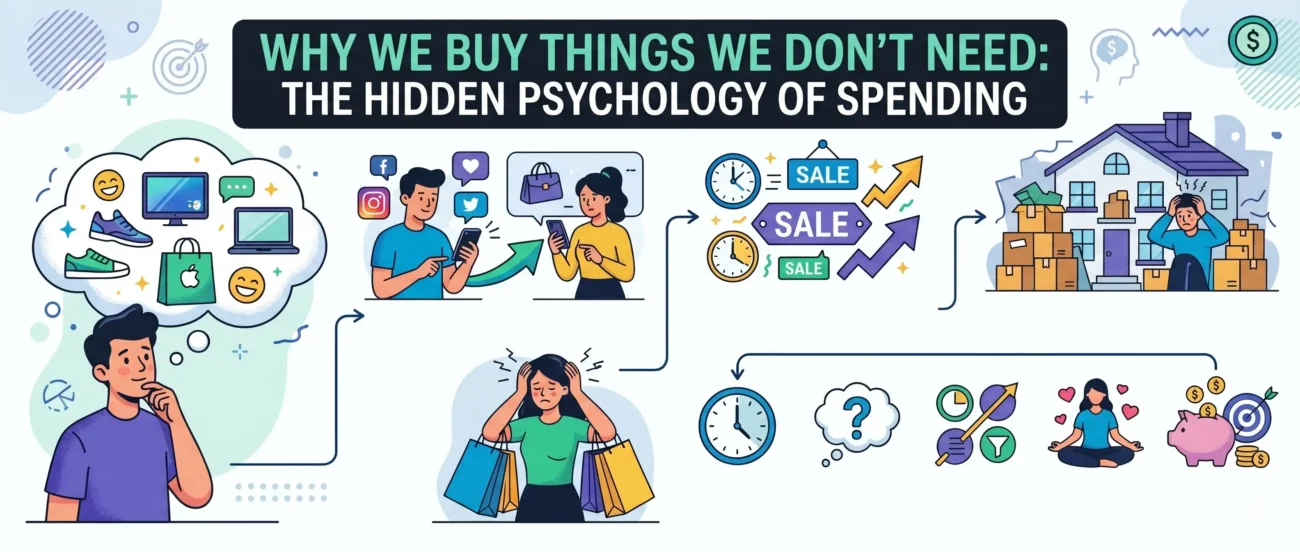
Why We Buy Things We Don’t Need: The Hidden Psychology of Spending
Have you ever walked into a store to buy one thing and come out with five? Or opened a shopping app to look and ended up placing an order you never planned to make? A new pair of shoes, another kitchen gadget, a phone upgrade, or clothes. Later, many people ask themselves a question: “Why did I buy this?”
The answer is simple: buying is not always about need. Most of the time, it is about emotions, habits, pressure, and psychology.
Modern shopping is designed to make people spend more. Advertisements, discounts, social media, and even emotions influence decisions every day. Understanding the psychology behind spending can help people make wiser financial choices and avoid unnecessary purchases.
The Brain’s Sneaky Tricks
Our spending habits aren’t just about logic or necessity. They’re deeply rooted in psychology, the hidden ways our minds work.
We Buy to Chase Happiness: We think that a new phone, fancy shoes, or bigger TV will make us happier. This is called the “hedonic treadmill.” You feel excited when you buy something new, but soon your brain gets used to it and wants the next thing. It’s like eating one cookie, good for a moment, but never enough.
Research shows that experiences (a trip or dinner with friends) usually bring longer-lasting joy than objects. Yet we keep buying stuff because the excitement feels so good in the moment.
Status and Social Pressure: Deep down, many purchases are about how others see us. We want to look successful, cool, or “with it.” When your friend posts a new car or your colleague shows off designer bags, a little voice whispers: I need to keep up.
This is especially strong on social media, where everyone seems to have perfect lives and perfect things. It creates FOMO — Fear of Missing Out — and suddenly that unnecessary item becomes essential.
Emotional Shopping: Had a bad day? Stressed? Bored? Shopping gives a quick dopamine hit, a little rush of pleasure in your brain. It’s like emotional comfort food. Retail therapy feels great in the moment, but it doesn’t solve the real problem and often leaves you with guilt and clutter.
Clever Marketing Plays: Companies are experts at pushing our psychological buttons. Limited-time offers create urgency. “Everyone’s buying this” triggers social proof. Beautiful ads link products to confidence, love, or adventure. Even the way stores are designed (wide aisles, nice lighting, pleasant smells) makes us linger and spend more.
The Real Cost
Buying things we don’t need isn’t just about money. It leads to:
- Cluttered homes that feel stressful
- Debt that creates anxiety
- Less money for things that truly matter (savings, health, or helping family)
- A constant feeling of “not enough.”
Ironically, chasing happiness through shopping can make us less happy in the long run.
How to Break the Cycle
Understanding spending psychology is the first step toward better financial habits. The good news? You can outsmart your brain. Here are simple tricks that actually work:
- The 48-Hour Rule: See something you want? Wait two days. Many impulses disappear with time.
- Ask Better Questions: Before buying, ask: “Will this add real value to my life?” or “Do I truly need this, or do I simply want it now?”
- Track Your Triggers: Notice when you shop the most — after scrolling social media (Facebook, Instagram, etc.)? When bored? Stressed? Do not shop when feeling stressed, angry, lonely, or overly excited. Find healthier replacements, such as walking, calling a friend, or a hobby.
- Focus on Gratitude: Regularly appreciate what you already own. It reduces the urge for more.
- Set Clear Goals: Decide what your money is for (a dream vacation, financial peace, starting a side hustle). It becomes easier to say no to things that don’t help.
Final Thought
We don’t buy things just because we’re weak or wasteful. We buy because we’re human — wired to seek pleasure, connection, and meaning. Understanding the hidden psychology behind spending is the first step to taking back control.
Next time you feel that shopping itch, pause and ask yourself: What am I really trying to buy here? The answer might surprise you — and save you money, space, and stress.
What’s one thing you bought recently that you didn’t really need? Share in the comments. You might realize you’re not alone. And if this blog helped, pass it along to a friend who could use it too.
Small changes in how we think about money can lead to big changes in our lives. Start today.




Registration was super quick and I was able to start playing in minutes. Definitely a user friendly site. 10jiliccregister
Super happy with the rewards program here. It really keeps things exciting and gives you more value for your time. phbet100com is the real deal.
[9650]8kbet Login PH | Online Slots na may Gcash Deposit,Mag-8kbet login ph na para sa legit online casino philippines. Mag-download app at matuto kung paano maglaro ng baccarat. Sali na at mag-enjoy! visit: 8kbet