

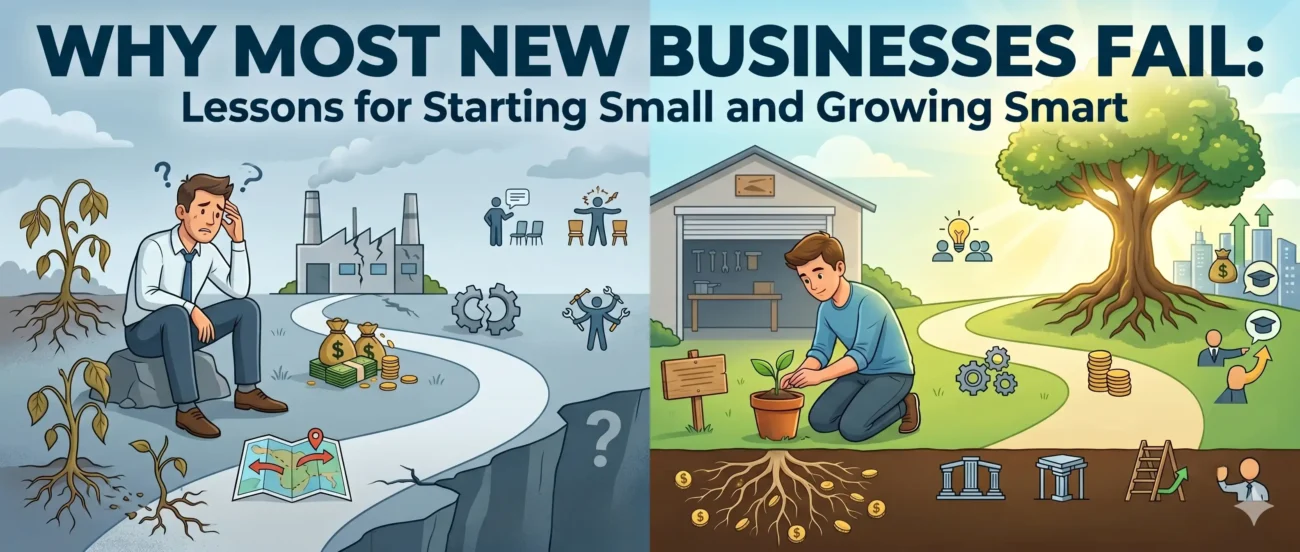
Why Most New Businesses Fail: Lessons for Starting Small and Growing Smart
Starting a business is an exciting journey. Many people dream of becoming their own boss, earning more money, and creating something meaningful. It sounds exciting, right? You imagine a big future: multiple locations, a team of employees, and financial freedom. Every big company once started small. However, in reality, most new businesses fail in the early stages.
Why does this happen? It’s not because people don’t work hard. It’s usually because they make big mistakes. Understanding these common mistakes can help new entrepreneurs avoid them and build stronger foundations.
The Dream vs. Reality
When people start a business, they often focus on success stories. They see profitable companies and assume growth will come quickly. But the truth is, success usually takes time, patience, and careful planning. Many businesses fail because expectations are too high and reality is not fully understood. The process of learning and applying that learning is painstaking. New enterprises ignore this fact, focusing on the formula for getting rich quickly. Ultimately, this attitude leads to failure.
Lack of Clear Planning
One of the biggest reasons businesses fail is poor planning. Some people start without a clear idea of what they are offering, who their customers are, or how they will make money. Without a proper plan, it becomes difficult to make the right decisions. A simple business plan—even a basic one—can provide direction and clarity.
Ignoring the Market
A business must solve a problem or meet a need. If people don’t need the product or service, the business will definitely fail. Many entrepreneurs fall in love with their idea but forget to ask an important question: Do customers actually want this? Understanding the market, customer needs, and competition is essential.
Poor Financial Management
Money is the lifeline of any business. Many small businesses fail because they run out of cash. They keep no backup to handle such a situation. This also happens when expenses are too high, income is too low, or money is not managed properly. Some business owners mix personal and business finances, which creates confusion and risk. Keeping track of income and expenses is crucial for survival.
Trying to Grow Too Fast
Growth is good, but growing too quickly can be dangerous. Some businesses expand before they are ready—hiring too many employees, opening new branches, or spending heavily on marketing. Without a strong base and experience, rapid growth can lead to collapse. Starting small and growing steadily is often a safer approach. This is often ignored due to overconfidence and a lack of understanding.
Lack of Skills and Experience
Running a business requires multiple skills—management, communication, finance, marketing, and problem-solving. Many new entrepreneurs underestimate this. Passion is important, but it is not enough. Learning continuously and seeking advice from experienced people can make a big difference. If you have a mentor, you will definitely increase the chances of your success.
Fear of Failure and Giving Up Too Soon
Every business faces challenges. There will be slow days, losses, and setbacks. Some entrepreneurs give up at the first sign of difficulty. Success often comes to those who stay consistent and learn from their mistakes. Failure is not the end—it is part of the journey.
Poor Marketing and Visibility
Even a great product will fail if people don’t know about it. Many businesses struggle because they do not promote themselves effectively. In today’s world, simple tools like social media can help reach a large audience at a low cost. Consistent and honest marketing builds trust and attracts customers.
What Does “Start Small and Grow Smart” Mean?
Starting small does not mean thinking small. It means building step by step, learning along the way, and making improvements. Grow smart means having a vision (thinking big), setting goals, and aiming for long-term success.
A successful business is not built overnight. It grows with time, effort, and smart decisions.
Think about a famous company like Apple. Did Steve Jobs, Steve Wozniak, and Ronald Wayne start it by building a giant factory? No. They started in Jobs’ parents’ garage in California. They built one simple computer at a time.
They thought big (changing the world) but started small (a garage workshop).
Final Thoughts
Most businesses fail early, not because the idea is bad, but because the foundation is weak. With proper planning, market knowledge, financial discipline, and a strong mindset, the chances of success increase significantly.
Starting a business is a bold step. Those who learn, adapt, and stay committed are the ones who eventually turn small beginnings into big success stories.
Remember: The tallest trees grow from tiny seeds. But they survive only if they take the time to build strong roots first.
So go ahead. Dream big. But start very, very small. That is how you win.




I love it very, very much
Sahil, don’t you think that this blog is for you and the youth who want to make this world a better place? I love helping young aspirants. You may ask me to write on the topic of your choice.